 1) Jump to "Foreword/Database Links"
3) Jump to "Classic Vinifera Varieties and Synonyms"
4) Jump to "Lesser/Crossed European Vinifera Varieties"
5) Jump to "French-American/American Hybrid/Native Varieties"
6) Jump to "Introductory Information on Hybrids"
8) Jump to "General Notes on Grapevine Cultivation"
9) Jump to "Misc. Viticulture Links/FAQ/Glossary".
The following Wine-grape Glossary, containing a clickable INDEX listing and other clickable internal text links, is designed to aid individuals interested in knowing something about the fruit that is transformed into his or her favorite wine. It can be downloaded in either its ascii or hypertext format by the reader for free distribution among individuals. The only restriction is the right of authorship credit which should be retained on all copies made.
Because the potential scope is so huge only the more commonly grown or known popular grape-names are referenced. Compiled by a non-specialist for the benefit of non-specialists it is hoped that inaccurate taxonomy references will be overlooked, although a strong effort is made to limit the number of errors. The glossary should be regarded only as an informational starting point, it is up to readers to use those references that occur as jumpimg off points for deeper understanding. Seekers of (other than some required reference varieties) latin-style botanical names, hybrid-grape numberings, vine ampelographic descriptions etc. are advised to refer to an appropriate resource. Occasionally encountered alias lesser names are highlighted in accessed text but not "jumpably" link-referenced because they are not regarded as being important. Also, in order to allow conformity to current international standards and successful searches, an attempt has been made to use variety name spelling emulating that found in the Geilweilerhof database mentioned below (eg. the use of variety name suffixes such as "O.P" and "S.P" meaning "Open Pollinated" and "Self Pollinated" respectively) - although changes and modifications may be made from time to time as new facts (eg. new DNA reports dealing with variety-pedigree research) emerge in the literature.
A recently (1996) published book, "Jancis Robinson's Guide to Wine Grapes", lists over 800 grapenames and to a degree renders this glossary obsolescent. However, because her book omits most American hybrid varieties and her listing concentrates on european vinifera or crosses, readers may still find the following file helpful and of some value.
Additionally a U.S. Dept. of Agriculture database search page can be accessed via the link URL:
Several Database sites of interest to researchers and grapegrowers are now available. Links to useful sites are as follows:
New readers should be aware that their protocol system requires "frames" compatibility for best results with this technical resource.
Readers contemplating planting their own vines may find the Grape Diseases page at UC Davis of interest. It is a comprehensive database that includes disease example images. It can be browsed via the link URL:
NB: The Netscape/I.E menu bar "Edit" drop-down menu "Find in page" item offers rapid access to keywords throughout the glossary text (e.g; "Pierce's" for varieties resistant to Pierce's Disease).
Some comments on soil and vine preparation also appear near the end of this glossary (see "General Note on Grapevine Cultivation" etc).
Cool climate dwellers should find the grape recommendations for New York State of interest. The Geneva Research Station of Cornell University lists their evaluations at the link URL:
Readers interested in Rootstocks can find an informative article about them at the link URL:
Admirers of wine know that the type of grape from which wines are fermented will in large part determine the basic fruit-flavor characteristics, both aroma and taste, of the final product. As a result, wines of high reputation are often regarded as associated with a single grape variety, often referred to as a "varietal", especially in the english-speaking world.
Because of this, such grape-names as Cabernet Sauvignon for red Bordeaux, Sémillon and Sauvignon Blanc for Sauternes, Pinot Noir for red Burgundy and Chardonnay for white Burgundy, (etc), are now embedded in the "wine-speak" language. However these names can be misleading because they imply a precision that in reality is not present.
An example is that there is no such thing as "the" Pinot (Noir). In fact accuracy demands that it be referred to as "a" Pinot (Noir) because the name does not belong to a unique vine species but to what the french grower calls a "cépage", that is, a growth defined as a group of closely related but not quite identical vine varieties sharing the same genetic background; in this case a variety that research is increasingly revealing to be derived from a very ancient strain of V.vinifera with a currently generic name of "Pinot". These different strains of the Pinot cépage are technically known as "clones", usually individually identified by adding a secondary name that refers to a special characteristic, place name or clone developer etc. For example; it has been estimated that worldwide there is a minimum of 200 Pinot (Noir) clone versions currently, (1996), planted - including approximately 47 versions planted in the vineyards of Burgundy and nearby districts in France - resulting in a great variation of wine quality and ageing ability etc. The same sort of situation applies to many other strains of the "cépages nobles", or "noble varieties", such as the Riesling and others.
Another example is the assumption, commonly made, that the highly regarded red Bordeaux wines are made entirely from the Cabernet Sauvignon grape. In fact many of the famous "great crus" vineyards in Pomerol and St.Émilion contain none at all. It is mainly grown in the Médoc and Graves subdistricts and even there is only one of several vine varieties, recent figures showing that fully 40% of the grapes grown consist of Merlot. Normally the wine made from Cabernet Sauvignon is blended with wines made from such distantly related grapes as the Merlot, Cabernet Franc, Petit Verdot and others.
Knowing the above facts, the following information should be used with care. Many of the grape names will be found to be connected in some way and are cross callable. When they are not it is usually for reasons of brevity, or lack of in-depth knowledge, because it would not serve any useful purpose to pursue the details about thousands of clones worldwide.
[A] Arbst - Aubaine - Auvernat - Auvernat Noir
[B] Balsamina - Beaunois - Bigney - Black St. Peter - Blanc Doux - Blauburgunder - Blauer Burgunder - Blauer Klevner - Boal - Bordo - Bouchet - Bouchy - Breton
[C] Cabernet Franc - Cabernet Sauvignon - Carmenet - Chardonnay - Chenin Blanc - Chevrier - Chiavennasca - Columbier - Coraillod - Crabutet Noir - Crljenak - Cygne Blanc
[E] Epinette Blanche
[F] Feinburgunder
[G] Gentil Rose Aromatique - Gewürztraminer - Green Grape - Gros Bouchet
[M] Malaga - Medoc Noir - Merlot - Morillon - Muscat - Muscat Blanc à Petit Grains - Muskat-Sylvaner
[O] Orange Muscat
[P] Petit Cabernet - Petite Sainte-Marie - Petite Vidure - Picutener - Pugnet - Pineau de la Loire - Pinot Blanco - Pinot Chardonnay - Pinot Droit - Pinot Gouges - Pinot Musigny - Pinot Nero - Pinot Noir
[R] Red Traminer - Rheinriesling - Rhine Riesling - Riesling - Riesling Renano
[S] Sauvignon Blanc - Sauvignon Gris - Sauvignon Noir - Sauvignon Jaune - Sauvignon Rose - Schwartz Klevner - Scyras - Semillion - Semmilon - Sémillon - Shiraz - Spanna - Spatburgunder - Spätburgunder - Steen - Syrah
[T] Traminer Musque - Traminer Rot
[U] Uva Francese
[V] Veron - Vert Dore - Vidure
[W] White Pinot - Weisser Clevner - Weisser Riesling - White Riesling
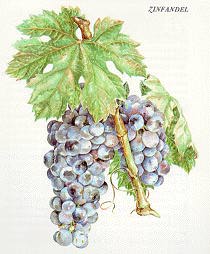
[Z] Zinfandel
End of Classic Vinifera Varieties and Synonyms Text.
2) Jump to French-American/American Hybrid/Native Varieties
[A] Abbondosa - Abbuoto - Aboto - Abouriou - Achiappapalmento - Acolon - Afus Ali - Agianniotiko - Agiorgitiko - Aglianico - Agliatica - Agria - Agudello - Ahmeur bou Ahmeur - Aidani - Aidén - Airen - Aladasturi - Alamis - Albalonga - Albana - Albany Surprise - Albariño - Albarola - Albilla - Albillo Real - Albillo de Toro - Albillo Krimskii - Alcañón - Aleatico - Alexandreuli - Alexandrian Moschato - Alfrocheiro - Alphonse Lavalee - Alicante - Alicante Bouschet - Alicante Ganzin - Aligoté - Aligoté Doré - Aligoté Rouge - Aligote Vert - Almuñeco -Altesse - Altrugo - Alva - Alvarinho - Alzey S. 88 - Alzey S. 3983 - Alzey 7957 - Amabile - Amaral - Amigne - Amorgiano - Ancellotta - André - Ansley's Large Oval Black - Ansonica - Antibois - Aragonêz - Arakseni - Aramon - Aramont - Arauxa - Arbane - Arbanne - Arbois - Argaman - Argant - Argossa - Aribona - Aris - Arriloba - Arinto - Arinto do Dão - Arnad Montjovet - Arneis - Arquitano - Arrufiac - Arnsburger - Arvine - Asprinio Bianco - Assario Branco - Assyrtiko - Asuretuli (Shavi) - Athiri - Aubin Blanc - Aubin Vert - Aubun - Aucarot - Aunis - Auxerrois - Auxerrois Blanc - Auxerrois Gris - Avanà - Avarengo - Avello - Avesso - Avola - Axina - Azal (Branco) - Azal Espanhol - Azal Tinto
[B] Babeasca Neagra - Bacchus - Bachet Noir - Badacsony 7 - Badacsony 10 - Baga - Báhghâ - Balada - Balafan - Balsamina Bianca - Balsamina Nero - Baltica - Balzac Blanc - Barbarossa - Barbaroux - Barbera - Barbesino - Baresana - Baroque - Bassanino - Bastardo - Bazaleturi - Batiki - Baxter's Sherry - Beaunoir - Beichun - Belina Drobna - Bellone - Berdello - Bergeron - Berlinka - Bernarde - Bequignol Noir - Bequignaou - Beverdino - Biancame - Bianchello - Bianchetta - Bianchetto - Bianco d'Allesano - Bianco di Nizza - Bianco di Valdigna - Biancolella - Biancone - Bical - Bicane - Bigolona - Bikaver 13 - Bikaver 12 - Biturica - Blanca del Pais - Black Alicante - Black Cluster - Black Corinth - Black Hamburg - Black Malvoisie - Black Monukka - Black Muscat - Black Portugal - Black Prince - Black Riesling - Black Saint Peters - Blanc d'Euvizin - Blanc de Morgex - Blanc du Valdigne - Blanchette - Blanquette - Blauburger - (Blauer) Arbst - Blauer Weinsberger - Blaufränkisch - Blau(er) Portuguiser - Blue Franc - Blue French - Blue Imperial - Boal - Boal Cachudo - Bobal - Bobal Blanco - Bogazkere - Bogdanusa - Bombino Bianco - Bombino Nero - Bonamico - Bonarda - Bonarda (Piemontese) - Bonarda Novarese - Bondola - Bonvedro - Bonvino Nero - Bordo - Borraçal - Bosco - Boskokisi - Boskoops Glorie - Bouchalès - Bouchet - Bouchy - Bouquettraube - Bourboulenc - Bouvier - Bouysselet - Bovale Piccolo - Bovale Sardo - Brachetto - Braquet - Braucol - Brauner Veltliner - Breidecker - Breton - Breval - Brocol - Brown Frontignac - Brown Muscat - Brugnola - Brujidera - Brunello - Bual - Budai Zöld - Bukettraube - Burger - Burgundy - Busuioaca de Bohotin - Buzzetto
[C] C23-92 - C96-54 - Cabernet Cubin - Cabernet Franc - Cabernet Dorio - Cabernet Dorsa - Cabernet Duras - Cabernet Gros - Cabernet Mitos - Cabernet Pfeffer - Cabernet Severnyi - Cacciola - Caccione Nero - Cadarca - Cagnina - Cainho Bravo - Caiño Gordo - Caiño Grande - Caiño Grosso - Caiño Longo - Caiño Redondo - Caiño Tinto - Calabrese - Caladoc - Calbanesco - Cal Karasi - Calcatella - California H59-90 - Calitor - Callet - Calzin - Camaralet de Lasseube - Camarèse - Canaiolo (Nero) - Canaiolo Romano - Canina (Nera) - Caninu - Cannonau - Capbreton Rouge - Cape Riesling - Cari - Carignan - Carignane - Carina - Cariñena - Carinyena - Carmenère - Carmina - Carmine - Carminoir - Carnal - Carnelian - Carola - Carricante - Castelão Francês - Castor - Catanese Bianco - Catarrato Bianco - Catarrato Nero - Cecubo - Celar - Cencibel - Cenicero - Centurion - Cep Gris - Cerceal - Cesanese - Cesar (Noir) - César - Cesar Blanc - Cetinka - Chalosse - Champagne - Chaouch Blanc - Charbono - Charbonneau - Charmont - Chasan - Chasselas - Chasselas Doré - Chasselas de Courtiller - Chasselas Duhamel - Chasselas Musque - Chasselas Napoleon - Chasselas Raisin de Palestine - Chasselas Rose - Chasselas Vibert - Chauché Gris - Chaudenet Gras - Chausset - Chenel - Chenin Noir - Chichvi - Chinuri - Chkhaveri - Cienna - Ciliegiolo - Cinsault - Cinsaut - Cirfandli - Cividin Bianco - Cividino - Clairette - Clevner - Clare Riesling - Cococciola - Coda di Volpe - Codega - Colombard - Colorino - Columna - Cometta - Completer - Comtessa - Conegliano - Corbeau Noire - Cornalin - Cortese - Corvina Gentile - Corvina Nera - Corvinone Veronese - Costiola - Côt - Counoise - Courbu Blanc - Courbu Noir - Courbu Petit - Courtiller Musque - Cove - Crato Branco - Crato Preto - Criolla Chica - Criolla Grande - Crljenak - Crljenak Kasteljanski - Croassera - Croatina - Crouchen - Cruinon - Crujidera - Csaba Gyongye 1957 - Csaba Gyongye 1966 - Cserszegi Fuszeres - Csillam - Cyperntraube - Cypro Nero
[D] Dalmasso 13-11 - Dalniewostoznyd Ramning - Damery - Dameron - Dannery - Daneri - Deckrot - Debina - Delight - Diagalves - Diamond Jubilee Grape - Diamond Muscat - Dilajt - Dimiat - Dindarella - Dinka - Diolinoir - Diolly - Dobricic - Dolceolo - Dolcetto - Domina - Doña Blanco - Doña Branca - Dona Sofia - Don Muscat - Doradillo - Doral - Dornfelder - Douce Noire - Dr. Hogg - Drupeccio - Drupeggio - Duna Gyongye - Dunkelfelder - Durade - Duras - Durella - Durello - Dureza - Durif - Duriff - Durize - Dvietes 4-2-108 - Dzvelshava
[E] Early Burgundy - Early Loon - Eger 205 - Eger 208 - Ehrenfelser - Elbling (Weiss) - Elbling Schwarz - Ellanico - Ellenico - Emerald Riesling - Emir - Enfariné - Enfumé - Enantio - Erbaluce - Ermitage - Esfarrapa - Esgana (Cão) - Espadeiro - Ezerjó
[F] Faber - Färbertraube - Falanghina - False Carignan - Fantasy - Farbklevner - Favorita - Fegeri - Feher Dinka - Feher Kadarka - Feher Szagos - Fendant - Fer - Fernan Fer - Fernão Pires - Feteasca - Feteasca Alba - Feteasca Neagra - Feteasca Regala - Fetiaska - Fiano - Fié - Fiesta - Findling - Fior d'Arancio - Flame Tokay - Flora - Fogoneu - Fogoneu Francés - Folle Blanche - Folle Noire - Forastera - Forcallat - Formosa - Forta - Fortana - Foster's White Seedling - FR 993-60 - Fra Germano - Fragola - Framboise - Francavilla - Franc noir de la Haute Saône - Francois Noir - Frankental - Frankenthal - Frankenthaler (Blau) - Frankisch - Francusa - Freiburg 993-60 - Freiburger - Freisa - Freisamer - (French) Colombard - Fresno 18-94 - Frincusa - Friularo - Fromental Noir - Fromenteau (Gris) - Fromenteau - Fromentot - Frontignac - Früburgunder - Fruheburgunder - Frueher Malingre - Frühroter Veltliner - F.S 4-201-3 - Fumin - Furmint
[G] Gaglioppo - Gamaret - Gamay - Gamay Beaujolais - Gamay de Bouze - Gamay Noir à Jus Blanc - Gamay Noir Droit - Gamay (Vert) - Gamba di Pernice - Gamé - Gamza - Garanoir - Gardonyi G - Garganega - Garnacha - Garnacha Rosa - Garnacha Tinta - Garnacha Tinto - Garnacha Tintorera - Geilweilerhof SBL.2-19-58 - Geilweilerhof 4-25-7 - Geilweilerhof B-7-2 - Geisdutte Blau - Geisenheim 3-37 - Geisenheim 9-97 - Geisenheim 11-34 - Geisenheim 15-114 - Geisenheim 22-74 - Geisenheim GM 318-57 - Geisenheim GM 322-58 - Geisenheim 33-13-113 - Geisenheim GM 4984 - Geisenheim GM 6493 - Geisenheim 6494-5 - Geisenheim GM 6495-3 - Gelbling - Genouillet - Geysserin - Giacomino - Giboudot Blanc - Girò - Gliata - Gloria - Glorie Boskoop - Glory Boskoop - Gmelin - Godelho - Godello - Goldburger - Golden Champion - Golden Chasselas - Golden Hamburg - Goldmuskateller - Goldriesling - Goruli Mtsvane - Gouais (Blanc) - Gouais Noir - Gouveio - Graciano - Gragnano - Grand Noir - Grande Vidure - Granoir - Grasa (de Cotnari) - Grasevina - Grau Portuguiser - Grauer Burgunder - Greani - Grec Rouge - Grechetto - Greco Bianco - Greco Bianco di Perugia - Greco Nero - Greco Spoletino - Green Hungarian - Greghetto - Grenache - Grenache Gris - Grey Grenache - Grey Riesling - Grignolino - Grk - Grillo - Griset Blanc - Grobrot - Grolleau - Gropello - Gros Blanc de Villefranche - Gros Guillaume - Gros Manseng - Gros Margilier Espagnole - Gros Maroc - Gros Meslier - Gros Monsieur - Grosse Guillaume - Grosse Vidure - Groslot - Guarnaccia - Grüner Veltliner - Gurdjaani - Gutedel - Gutenborner - Gwäss - Gwaess
[H] Haengling Blau - Hamburg Moschato - Hampton Court Vine - Hanepoot - Harriague - Hárslevelü - Hasansky Sladky - Hegel - Heida (Païen) - Helfensteiner - Heroldrebe - Heunisch Blau - Heunisch Weiss - Himbertscha - Hivernage - Hochkroner - Hoelder - Hölder - Humagne Blanc - Humagne Rouge - Hondarrobi Beltza - Hondarrobi Zuri - Hundarribi Beltza - Hundarribi Zuri - Huxelrebe
[I] Ideal - Imperial Blue - Impigno - Incrocio Manzoni - Inzolia - Irsai Olivér - Italia - Italian Riesling - Izabella
[J] Jacquère - Jaén Blanco - Jaén - Jaén (du Dao) - Jaén Galeno - Jerez - Jewel - Joannes Seyve 23416 - Jongin - Jost (Geisenheim) - Juan Ibáñez - Jubiläumsrebe - Juhfark - Jurançon - Juwel
[K] Kadarka Blanc - Kadarka Blau - Kadarka Szuerke - Kale Burcu - Kalecik Karasi - Kanaan - Kanzler - Karabraimis - Kara Burcu - Kara Kalecik - Karola - Karstcevica - Keduretuli - Kékfrankos - Kéknyelü - Kékoporto - Kerrigan - Kerner - Khikhvi - Királyleányka - Kishmish Chernyi - Kleinberger Riesling - Klevner - Klosterneuburg 16-8 - Klosterneuburg 24-125 - Klosterneuburg 71 - Knipperle - Koelner Blau - Koevidinka - Königen der Weingärten - Kolor - Korinthiaki - Kotsifali - Kouldjinka - Kovidinka - Kozma CSVT 55 - Kozma CS.V 525 - Krakuna - Kraljevina - Krassato - Kuldzhinskii - Kunleany - Kypreiko Mavro
[L] Lacrima - Lafnetscha - Lagorthi - Lagrein - Lairén - Lambrusco - Lambrusco Nostrano - Lambrusco a Foglia Frastagliata - Lancelotta - Laouset - La Rochelle - Laski Rizling - Lauzet - Leányka - Lefkas - Lemberger - Len de l'El - Leopold III - Lercat Blanc - Lernatu - Lexia - Liatiko - Lignan Blanc - Limberger - Limnio - Limousin Blanc - Lindauer - Lisicina - Listan - Listán Blanca - Listán Negro - Listán Morado - Listán Prieto - Lledoner Pelut - Long Black Spanish - Loureira - Loureiro - Loureiro Tinto - Luglienga Bianca - Lumassina - Lupeccio - Lyonnais
[M]Macabeo Alcanol - Macabeo - Maccabeu - Maceratino - Mädchentraube- Madea - Madeleine Angevine - Madeline Angevine - Madeleine Royale - Madeleine Sylvaner - Magliocco Canino - Mainriesling - Malaga - Malaga Rose - Malagousia - Malanstraube - Malbec - Malbo Gentile - Malingre Précose - Mali Plavac - Malmsey - Malvasia - Malvasia Canaria - Malvasia Fina - Malvasia Riojana - Malvasia Rose du Po - Malvasia Trevisano - Malvasier - Malvoisie (Blanc) - Malvoisie (Noir) - Malvoisier - Mammolo - Manchega - Mandelaria - Manduria - Manicle - Manseng - Mansois - Mantonegro - Manto Negro - Manzoni 2-15 - Manzoni 6-0-13 - Marastina - Maratheftiko - Marcelan - Maria Gomes - Marienriesling - Mariensteiner - Marocain Noir - Marsanne - Martinsriesling - Marzemino - Mataosso - Mataro - Matrassa - Matsvane - Maturana Blanca - Mauzac - Mavro - Mavrodaphne - Mazuela - Mazuelo - Médoc Noir - Mechveliani - Melnik - Melon de Bourgogne - Mencía - Menu Pineau - Merlot Blanc - Merwal - Merzling - Mesenicola (Black) - Meslier St Francois - Meslier Vert - Meunier - Mezes Feher - Michele Pallieri - Michurinetz - Millardet 125-1 - Milleron Troyen Blanc - Millers Burgundy - Milloccio - Minhota - Mishket - Misket - Mission - Molette - Molinara - Moll - Monastrell - Monbadon - Mondeuse Noir - Mondeuse Blanche - Monemvasia - Monica - Montepulciano (d'Abruzzo) - Monte Senario - Montils - Montonico - Montù - Montuni - Monukka-I-Siah - Morasso - Moratón - Moravia - Moravia Agria - Moravia Dulce - Morbidella - Morellino - Morio Muscat - Moristel - Morrastel - Morro d'Alba - Mortágua - (Preto de) Mortágua - Moscadelletto - Moscato di Canelli - Moscato Giallo - Moscato Mavro - Moscatel - Moscatel de Alejandria - Moscatel de Austria - Moscatel Gordo - Moscatel Romano - Mosciolo - Moschofilero - Moschomavro - Moschophilero - Moslavac - Mosler - Mostosa - Mourillon - Mourisco Preto - Mourvèdre - Mtsvane (Kahetinskii) - Mudzhuretuli - Müllerrebe - Muellerrebe - Müller-Thurgau - Murray (River) Riesling - Muscadel - Muscadelle - Muscadelle de Bordelais - Muscadelle de Nantes - Muscadet de Bourgogne - Muscat de Valais - Muscardin - Muscat Blanc - Muscat Dr. Hogg - Muscat Dr. Hoog - Muscat Fleur d'Oranger - Muscat Frontignon - Muscat Gordo Blanco - Muscat Hamburg - Muscat Italia - Muscat Lunel - Muscat Noir - Muscat Noir Hatif Marsella - Muscat of Alexandria - Muscat Oliver - Muscat Ottonel - Muscat Rouge de Madere - Muskatel - Muskateller - Muskat Krymskii - Muskat-Sylvaner
[N] Narince - Napa Gamay - Nasco (Bianco) - Nebbiolo Bianca - Negra - Negrara - Negrette - Negroamaro - Negoska - Negra Tenera - Negral - Nera Dolce - Nerello (Cappuccio) - Neretta Cuneese - Neretto - Nero d'Avola - Nessun - Neuburger - Nièddera - Nielluccio - Niellucciu - Noblessa - Nobling - Nocera Bianca - Noir Hatif de Marseille - Norakert - Nosiola - Notre Vigne - Nuragus
[O] Obaideh - Oberlin 595 S.P - Oberlin 716 - Odzhaleshi (Mechvelianis) - Oeillade - Ojo de Gallo - Okanagan Riesling - Okourechouli - Olasz Riesling - Olho de Sapo - Olivella - Olivese - Olivette Noir - Ondarribi Beltza - Ondarrabiya Beltza - (Ondarrubiya) Negra - Ondarrabi Zuri - Ondenc - Oporto Szuerke - Opthalmo - Optima - Orange Flora - Orange Muscat - Orange Muskat - Orangeriesling - Orangetraube - Oraniensteiner - Orion Gris - Ortega - Ortlieber - Ortrugo - Oseleta - Oselot - Osiris - Osteiner - Österreichisch Weiss - Ottavianello
[P] Paarl Riesling - Padeiro de Basto - Pagadebit (Gentile) - Pagadebito - Pais - Palas - Pallieri - Palombino - Palomino - Palomino Fino - Palomino de Jerez - Pambakada - Pambakina - Pampanuto - Pansà Blanca - Papazkarasi - Parc - Pardina - Parellada - Parraleta - Pascale di Cagliari - Pausanias - Pavsanias - Pearl of Zala - Peccoleto - Pecorino - Pedernã - Pedreña - Pedro Jiménez - Pedro Ximen - Pedro Ximénez - Pelada - Pelara - Pelaverga (Piccolo) - Peloursin - Perdin - Perel - Pere'e Pallummo - Perel - Perlan - Perle von Csaba - Perlette (Seedless) - Perlet - Perricone - Periquita - Petite Arvine - Petit Bouschet - Petit Courbu - Petit Meslier - Petite Camaran - Petite Manseng - Petite Pineau - Petite Raisin - Petit Rouge - Petite Sirah - Petit Verdot - Peurion - Picardan (Blanc) - Picardan (Noir) - Picargniot - Picapoll - Piccola Nera - Picolit - Picpoul - Picutener - Pignolo - Piedirosso - Pignola Nera - Pignola Spanna - Pignola Valtellinese - Pignatello - Pignoletto - Pineau d'Aunis - Pinella - Pinello - Pinenc - Pinotage - Pinot Beurot - Pinot Bianco - Pinot Blanc - Pinot Blanco - Pinot d'Ai - Pinot de l'Ermitage - Pinot Grigio - Pinot Gris - Pinot Meunier - Pinot Nero - Pinot Noir - Pinot Precoce Noir - Pinot Rouge - Pinot St. George - Pinot Teinturier - Piquepoul Blanc - Piquepoul (Noir) - Piros Tramini 1960 - Planta Fina de Petralba - Plant de Manosque - Plant de Trois de la Grande Espese - Plant de Trois de la Moyenne - Plant de Vaux - Plant Gris - Plant Jacquot - Plavac Mali - Plavac Veli - Plavis - Pleschatik - Pocalza - Pontac - Portan - Portugais Bleu - Portugal - Portugal Malbec - Portuguiser (Blau) - Portugizac - Portuguiser (Grau) - Posip - Poulsard - Pozsonyi - Prc - Précoce de Malingre - Prëmetta - Prensal Blanco - Pressac - Preto de Mortagua - Pribidrag - Prie Blanc - Prieto Picudo - Primaticcio - Primitivo (di Gioia) - Procanico - Prosecco - Provechón - Prugnolo Gentile - Prunelard Blanc - Prunelard (Noir) - Pully B-28 - Pully 1-33 - Pugnet - Putscher - Putzscheere
[Q] Quagliano - Quajara - Queen's Arbor - Queen of the Vineyard
[R] Rabaner - Rabigate - Rabigato - Rabiosa - Rabo de Ovelha - Raboso (Piave) - Rachuli-Tetra - Raffiat de Moncade - Ragusana - Raisin d'Or - Raisin de Palestine - Ramisco - Ramorantin - Ranfol - Ranful Weiss - Rassegui - Räuschling - Rauschling Edelweisser - Razzagui - Rebo - Red Malaga - Red Stemmed Côt - Refosco - Refosco d'Istria - Regina - Reichensteiner - Requena - Rèze - Rhoditis - Ribadavia - Ribier (Noir) - Ribolla Gialla - Ribolla Nera - Ribolo - Rieslaner - Riesling Renano - Rigotti 107-3 - Ritino - Rivaner - Rkatsiteii - Rkatsiteli - Robola - Roche - Roditis - Rognon de Coq - Rolle - Romain - Romano - Romorantin - Rondasca - Rondinella - Rondo - Rossanella - Rossese - Rossignola - Rossola Bianca - Rossola Rossa - Roter Veltliner - Rotberger - Rotburger - Rotgipfler - Roublot - Rouillot - Rouge de Diolly - Rouge de Fully - Rouge du Pays - Rouchet - Roupiero - Roussanne - Rousselet - Roussette - Roy - Royal - Royalty - Rubienne - Rubin - Rubin Bolgarskii - Rubired - Ruby Cabernet - Ruchè - Rufeta - Rufete - Ruffiac (Blanc) - Rukatac - Ruländer - Russian Seedless - Ruzsica - Ruzsitza
[S] Sacy (de Lyon) - Sagrantino - Samanna - Samling 88 - Samtrot - Sangiovese - Sangiovese Grosso - Sangioveto - Saperavi (Charni) - Saperavi Severnyi - Sauvignonasse - Sauvignon Gris - Sauvignon Vert - Savagnin Blanc - Savagnin Rose - Savatiano - Scheurebe - Schiava Gentile - Schiava Grossa - Schioppettino - Schoenburger - Schonburger - Schwarzelbling - Schwarzriesling - Scorzamara - Scorza Amara - Sciacarello - Semenac A 16-76 - Sercial - Serprina - Sereksia (Blanc) - Sereksia (Noire) - Sereksia Tcheurnaia - Serine - Sev(ernyii) Arakseni - Sev(ernyii) Lernatu - Seyanets Malengra - Sganetta - Sgavetta - Shaltrauben - Shanti - Shirai Kara - Shiroka Melniska Losa - Siegerrebe - Siegfried - Siegfriedrebe - Siewiernyj - Silberweiss - Silcher - Silvaner - Sipelj - Sipon - Solaris - Sonaka (Seedless) - Sonoma Riesling - Souzão - South African Riesling - Spätrot - Staufer - Stavroto - Steinschiller - St. Émilion - St. George - St. Laurent - St-Pierre Doré - Strepparossa - (Le) Subereux - Subirat - Subirat Parent - Suessrot - Sulmer - Sultana - Sultanieh - Sultanina - Sultanine Blanche - Super Hamburg - Suputinski - Sura Lisicina - Svanuri - Sylvaner - Symphonie - Symphony - Szagos Feher - Szurkebarat
[T] Tacelenghe - Taddone - Tamares - Tamarez - Tamianka - Tamiioasa Romaneasca - Taminga - Tannat - Tarrango - Tauberschwarz - Tazzelenghe - Tchkhaveri - Teinturier - Teinturier Téoulier - Temosci - Tempranillo - Téoulier (Blanc) - Téoulier (Noir) - Terrain - Teran - Terrano (Noir) - Terre Cherny - Teroldego - Terret Blanc - Terret Bourret - Terret Gris - Terret Monstre - Terret Noir - Tetra - Thompson Seedless - Tibouren - Timorasso - Tindillaro - Tinta Amarela - Tinta Barroca - Tinta Bairrada - Tinta Carvalho - Tinta Fina - Tinta Francisca - Tinta Madeira - Tinta Miúda - Tinta Negramole - Tinta do Padre António - Tinta del Pais - Tinta Pinheira - Tinta Poeirinha - Tinta Roriz - Tinta Roseira - Tinta de Toro - Tintilla de Rota - Tinto Cão - Tinto Fino - Titan - Tocai Friulano - Tokay - Tokay d'Alsace - Torbato - Torrette - Torrontés - Tortosi - Tortosina - Tourbat - Touriga - Touriga Franca - Touriga Francesa - Touriga Nacional - Trajadura - Traminer - Trebbiano - Trebbiano d'Abruzzo - Treixadura - Tresallier - Tressot - Tribidrag - Trincadeira - Trincadeira Preta - Trollinger - Trousseau (Noir) - Trousseau Gris - Troyen (Noir) - Troyen Blanc - Trujidera - Tsaoussi - Tsimlyanskii (Chernyi) - Tsitska - Tsolikouri - Tubino - Tullilah - Turan - Tvakveri - Tyrian
[U] Ughetta - Ugni Blanc - Ull de Llebre - Ulliade - Usakhelouri - Uva Barile - Uva del Friuli - Uva dell'Isola - Uva Fosca - Uva Francese - Uva Grilli - Uva Nera - Uva d'Oro - Uva Rara - Uva Salata - Uva Stretta - Uva Tedesca - Uvino
[V] Vaccarèse - Vaccume - Valdepeñas - Valdepeñera - Valdiguié - Vamvacada - Varajane Sinine - Veltliner Weiss - Venn's Seedling - Verdeca - Verdejo (Blanco) - Verdejo Palido - Verdelho - Verdello -Verdicchio - Verdiso - Verduzzo - Vermentino - Vernaccia - Vernatsch - Vernesino Bianco - Vertzami - Vespolina - Vespone - Vidure - Vien - Vieux Pacherenc - Vijiriego - Vilana - Villanueva - Viognier - Vissanello - Vitovska - Viura - Vradiano - Vranac - Vroege Loonse
[W] Walsh Riesling - Weihrauchtraube - Weinsberg S 341 - Weisser Burgunder - Weisser Gutedel - Weisser Silvaner - Weldra - Welschriesling - White Moschato - White Pinot - White Tokay - Wildbacher - Wisellertraube Weiss - Wuerzburg - Würzer
[X] Xarel.lo - Xeres - Ximen - Ximénez - Xynisteri - Xynomavro
[Z] Zala Gyongye - Zanta - Zante Currant - Zelen - Zelenka - Zenit - Zéta - Zeus - Zeusz - Zibibbo - Zierfandler - Zilga - Zingarello - Zirifahnler - Zirone - Zlahtina - Zlata - Zuria - Zweigelt - Zweigeltrebe Blau
End of Lesser/Crossed European Vinifera Varieties Text
Note: The above sites seem to have occasional shutdowns for continuing construction.
2) Return to "Lesser/Crossed European Vinifera Varieties"
[A] Abundance - African Queen - Agawam - Alachua - Albania - Albany Surprise - Alden - Alexander - Alexander Winter - Alpenglow - Alpha - Alwood - Ambros - America - Amerskiy - Aramon du Gard - Aramon Ganzin 1 - Aramon Rupestris - Aramon Seibel - Arcott - Aris - Armlong - Arnold 8 - Arnott - Arrott - Aspengold - Athens - Atoka - Aurelia - Aurora - Aurore - Autuchon
[B] Bacchus - Baco 2-16 - Baco Blanc - Baco 22A - Baco Noir - Bailey - Bath - Beaufort - Beaumont - Beaver - Beichun - Bell - Bellandais - Belo Otelo - Belvidere - Ben Hur - Beta - Bianca - Big Berry - Big Bunch - Big Concord - Black Beauty - Black Eagle - Black Fry - Black July - Black Spanish - Blanc Du Bois - Bland - Bland's Fox - Bland's Madeira - Blondin - Bloom - Bluebell - Blue Eye - Blue French - Blue Lake - Bokay - Bornemissza Gergely 15 - Brandis - Brant - Breidecker - Brianna - Brighton - Brilliant - Brockton - Bronx (Seedless) - Bryant - Buenos Ayres - Buffalo - Bullace - Bullitt - Burdin 7705 - Burgaw - Burgundy - Burr 1 - Burr's Early
[C] Cabernet Severny - Caco - Cadillon Dore - California L 11-2 - California L 11-3 - Cameo - Campbell Early - Canada - Canada Muscat - Canadice - Canner - Cape Grape - Captain - Captivator - Cardinal - Carlos - Carman - Carter - Carver - Cascade - Cassady - Castel - Catawba - Catawissa - Cayuga (White) - Challenger - Chambourcin (Noir) - Champagne - Champanel - Chancellor (Noir) - Chardonel - Charvat - Chelois - Chontay - Cimarron - Cliche 8414 - Clifton Constantia - Clinton - Colobel - Concord - Conquistador - Coronation - Corot Noir - Cottage - Couderc 7120 - Couderc 299-35 - Couderc Noir - Covert - Cowart - Creveling - Cynthiana
[D] Dakota - Darlene - Dattier de Beyrouth - Dattier St. Vallier - Daytona - Dearing - DeChaunac - Delaware - Delicatessan - Delicious - Devereaux - Diamond - Diana - Diana Hamburg - Dixie - Dixieland - Dixie Red - Dogridge - Dog Ridge - Doreen - Dracut Amber O.P - Dr. Collier - Dunstan 2 - Dunstan 56 - Dunstan (Demko) - Dutchess
[E] Early Amber - Early Daisy - Early Fry - Early Niabell - Early Steuben - Edelweiss - Eden - Eger 2 - Einset (Seedless) - Eleven Point - Elita 2-3-61 - Ellen Scott - Elmer Swenson 294 - Elvicand - Elvira - Emerald (Seedless) - Emily - Eona - ES 2-1-9 - ES 2-8-1 - ES 7-4-76 - Espirit - Eumalan - Extra
[F] Farrer - Favorite - Fern Munson - Festivee - FLA D6-148 - FLA P9-15 - Flame (Seedless) - Flame Tokay - Florida Fry - Florental - Florigon - Foch - Fort Worth #3 - Foster - Fragola - Fredonia - Frontenac - Frontenac Gris - Fry - Fry Seedless
[G]G-135 - G-194 - G-388 - G-994 - G-1013 - G-1925 - G-2496 - G-2589 - G-2861 - G-2918 - G-2963 - Galibert 261-12 - Galibert Coulondre 261-13 - Ganzin 1 - Gardonyi Geza - Garonnet - Gar-Supreme - Gasconade - Geneva White 7 - Geilweilerhof 67-198-3 - Geilweilerhof GA-49-22 - Geilweilerhof GA-58-30 - Georgia 3 - Georgia 5-7-5 - Georgia 9-6-2 - Georgia 11-2-2 - Georgia 12-12-1 - Georgia 12-2-2 - Georgia 19-43 - Georgia 28 - Georgia 37-40 - Georgia S.5-5-5 - Georgia S.29-49 - Georgia S.44-6 - Georgia S.44-7 - Georgia Seedling 29-49 - Glenora - Gloire de Montpellier - Goff - Golden Isles - Golden Muscat - GR 7 - Granny Val - Green Mountain
[H] Habitant (Blanc) - Harmony - Hartford - Hartford Prolific - Headlight - Hector - Herbemont - Herbert - Hermann - Hibernal - Hickmans Grape - Higgins - Himrod - Hopkins - Horizon - Howard - Hubbard - Hungarian - Hunt - Husman - Hybernal
[I] Inkameep Riesling - Interlaken - Iona - Isabella - Island Belle - Ison - Italian Grape - Ivan - Ives (Noir)
[J] Jacquez - Jaeger 70 - Janebell - Janesville - Janet - Jewel - Joannes-Sevre 26205 - Joffre - John Viola - Jumbo
[K] Kah Wah Din - Katelin - Kay Gray - Kee Wah Din - Keuka - King of the North - Kishwaukee - Kittredge - Kuhlmann 188-2 - Kuhlmann 191-1 - Kuhlmann 296-1 - Kuhlmann 319-1
[L] La Crescent - La Crosse - LaRouge - Lady Patricia - Lady Washington - Lake Emerald - Lakemont - L'Acadie - L'Ambertille - Landal - Landot 244 - Landot 4511 - Landot Noir - Last Rose - Latham - Laura Beverly - Lebanese No.9 - Lenoir - Léon Millot - Liberty - Lindley - Lomanto - Long John - Loretto - Louise Swenson - Lucida - Lucie Kuhlmann - Lucile - Lucille - Lukfata - Luola - Lutie - Lynden Blue
[M] McCampbell - Magnolia - Magoon - Malaga - Mantey - Marechal Foch - (Marechal) Joffre - Marguerite - Marquette - Marquis - Mars - Martha - Massasoit - Melody - Meridian 13 - Merrimac - MG 101-14 - Michurinez - Midsouth - Millot - Mills - Miss(issippi) Blanc - Miss(issippi) Blue - Missouri Riesling - MN 78 - MN 1094 - MN 1166 - MN 1211 - Monticello - Moored - Moore's Early - Moore's Diamond - Morio Muscat - Moskovskiy Ustoichiviy - Mrs Munson - Münch - Muench - Muscadine - Muscat de St. Vallier Blanc - Muscat du Moulin - Muscat Santa Vallier - Mustang
[N] Naples - Neosho - Nero - Neron - Nesbitt - Neva Munson - NY 797 - NY 10805 - NY 10830 - NY 12997 - NY 15291 - NY 18149 - NY 25681 - NY 33277 - NY 45910 - NY 46000 - NY 62.0122.01 - NY 65.533.13 - NY 70.0809.10 - NY 73.0136.17 - NY 76.0844.24 - New York Muscat - Niabell - Niagara - Niagara Red - Niagara Rosada - Nitodal - Nitodel - Noah - Noble - Noiret - Norris - North Fork - Norton
[O] Oberlin 595 S.P - Oberlin 716 - Okanagan Riesling - Oklahoma 23 S 52 - Ontario - Orlando (Seedless) - Orion - Osbu - Othello - Ozark Prize
[P] Pam - Patricia - Pense - Perle von Csaba - Petite Amie - Petite Jewel - Phoenix - Pierce - Pinard - Pineapple - Piney - Plant des Carmes - Plant Pouzin - Plantet - Post Oak - Post Oak 2 - Prachttraube - Prairie Star - President - Price - Princess - Prune de Cazouls
[R] Ramsey - Ravat 6 - Ravat 34 - Ravat 51 - Ravat 262 - Ravat (Blanc) - Ravat Noir - Ravat Vignoles - Rayon d'Or - Red Fox - Redgate - Regale - Regent - Reliance - Roanoke - Rogers 3 - Rogers 9 - Rogers 19 - Romulus - Rosa - Rosette - Roubidoux - Roucaneuf - Rougeon - Royal Isabella - Royal Rose - Rubaiyat - Rubiana - Ruby - R.W. Munson
[S] Sabrevois - Salado - Salamander - Saltcreek - Salvador (Blanca) - Salvador (Noire) - Saperavi Severnyi - Scarlet - Schuykill Muscadell - Schuyler - Scuppernong - Seibel 14 - Seibel 123 - Seibel 405 - Seibel 1000 - Seibel 2007 - Seibel 4668 - Seibel 4986 - Seibel 5279 - Seibel 5437 - Seibel 5455 - Seibel 5474 - Seibel 5898 - Seibel 6468 - Seibel 6905 - Seibel 7053 - Seibel 8216 - Seibel 8357 - Seibel 9110 - Seibel 9549 - Seibel 10713 - Seibel 10878 - Seibel 11803 - Seibel 13035 - Seibel 13053 - Seibel 14596 - Seibel 14665 - Seksarda - Selma Pete - Seneca - Senoia - Serena - Seyval (Blanc) - Seyve Villard 5-276 - Seyve Villard 12-129 - Seyve Villard 12-307 - Seyve Villard 12-309 - Seyve Villard 12-327 - Seyve Villard 12-375 - Seyve Villard 12-375 O.P - Seyve Villard 18-283 - Seyve Villard 18-315 - Seyve Villard 20-365 - Seyve Villard 20-473 - Seyve Villard 23-512 - Seyve Villard 23-657 - Sheridan - Sibera - Sirius - Skujina 675 - Skujinsh 675 - Somerset (Seedless) - Soraya - South Dakota 62-8-58 - Southern Home - Southland - Sovereign Coronation - Sovereign Opal - St. Croix - St. Francis - St. Pepin - St. Vincent - Stark Star - Sterling - Steuben - Stover - Strawberry Grape - (Le) Subereux - Suelter - Suffolk Red - Sugargate - Summerland 361 - Summit - Sunbelt - Super Hamburg - Supreme - Suputinski - Suwannee - Sweet Jenny - Swenson (Red) - Swenson White
[T] Tampa - Tara - Tarheel - Taskers Grape - Tatar Rizling - Taylor - Teleki 8 B - Ten Dollar Prize - Terret Monstre - Tetra - Thomas - Toldi - Topsail - Totmur - Traminette - Trask - Triomphe d'Alsace - Triumph - Trollhaugen
[U] Uhudler - Underhill 8-12
[V] Valvin Muscat - Van Buren - Vandal 63 - Vandal 163 - Vandal-Cliche - Vanessa Red (Seedless) - Valiant - Varousset - Veeblanc - Venus - Ventura - Verdelet - Vergennes - Vidal Blanc - Villard Blanc - Villard Noir - Vincent - Vineland 50154 - Vineland 63331 - Vinered - Virginia Muscadell - Virginia Seedling - Vivant
[W] Wallace - Walter - Waltham Cross - Warren - Watkins - Wayne - Welder - White Iona - White Male - Wild Montana - Wine King - Winona - Witt - Worden - Worthington - Wyoming
[X] XLNTA
[Y] Yates - Yuga - Yugoslav 5-24
[Z] Zita
The term "hybrids" indicates that, unlike many of the naturally evolved vines, and crosses, covered above, two or more vine growths of different species have been crossed genetically by human intervention to produce a quite unique species that combines the best possible characteristics of the parent vines and eliminates their weaknesses to the greatest feasible extent. The term "French-American" indicates that the two parent growths came from, on the one side, a european "Vitis Vinifera" and, most often, a "Vitis Labruscana" that evolved via random fertilization from a North American "Vitis Labrusca" vine growth native to the East coast.
There are many other types of native grapevine species common to N. America; eg. many T.V. Munson discoveries. Also "V. Aestivalis", "V. Borquiniana", "V. Cinerea", "V. Lincecumii", "V. Mustangensis" (formerly known as V. Candicans), "V. Riperia", "V. Rotundifolia", and "V. Rupestris" plus several other sub-species that do not necessarily share a specific "foxy" flavor/taste characteristic of the labrusca. Instead they are each capable of producing individual flavors, several of which are essentially neutral, and in some cases can bear a close resemblance to european wines. Nearly all played some part in the creation of the interspecific cultivars now used worldwide in various roles.
Many of the "hybrids" listed were created as a response to the seasonal temperature extremes commonly encountered in the northernmost temperate zones of Europe and N. America; and as counter to various disease's that can affect most of the vine transplant growths after importation to N. America from Europe. Each of the hundreds of hybrid crossings created yearly is allocated a number, e.g. "Seibel 5279", until they become commercially acceptable after extensive field trials, as the mentioned example did, eventually being named "Aurore". Only named varieties appear below, most of them capable of proven consumer acceptance when converted to varietal wine or wine blends although, in the face of the success of traditional vinifera wines with consumers, their market future has become, (1997), uncertain. Note that they currently cannot be labeled lawfully in many countries as "Quality Wines", a phrase reserved for use with Vinifera-derived wines only, and so are designated solely as "Table Wines" in those countries.
Growers in cool/cold climates should be aware that most vines vary in their sensitivity to low temperatures. Grafted vinifera planted in locations where minimum temperatures occasionally fall below 0 deg. Fahrenheit (-17 Centigrade) can be expected to suffer some cold injury. Protecting the graft union by "hilling-up" with earth, snow or mulch during the winter months assures the likelihood of trunk renewal and vine survival. In locations where minimum temperatures frequently fall below -10 deg. F. (ca -23 C.), trunk and cane protection is absolutely vital.
A 16 page Information Bulletin #233, pub. 12/93, US$4.75, entitled:
"Wine and Juice Grape Varieties for Cool Climates"
by Bruce I. Reisch et al. is obtainable from the Postal address:
Media Services Resource Center,
Cornell University,
7 Business and Technology Park, NY 14850.
Tel. No. (607) 255-2080
End of French-American/American Hybrid/Native American Varieties text
Planting new vines.
------------------
One to two-year old vines with suitable grafted rootstocks are recommended as relatively risk-free. Roots can reportedly be cut back to around 8-10 inches length if absolutely necessary although this action does seem to retard growth, during the first season, in some varieties planted in cool climate regions. Dig a hole about 10 inches deep and plant the vine, spreading roots apart on a small pile of soil so that the graft union will be 4 to 6 inches above ground level when the hole is back-filled. The scion is best restricted to 2 buds (when any danger of frost attack has passed). Point the 2-budded scion spur towards the support-stake or wire so the new shoots will grow as close to the support system as possible and will be easier to tie without bending and breaking. Backfill the planting hole and pack soil firmly as you go (not compressing the soil too much). Soil may have to be added later if it subsides too much after heavy rain. In drought-prone areas it is best to cover the entire new plant with soil, or other type of covering, for several weeks to prevent drying-out. Once growth has taken hold the soil is pulled away from the plant so that the graft-joint and buds/shoots are again correctly exposed above ground level.
If using own-rooted vines, all buds should be trimmed off except for the upper two (to prevent unwanted shoots coming up from the root zone). Plant as previously, making sure the two surviving buds are well above ground surface. Cover completely with a mound of dirt, removed later when the shoots push out of the mound and are well along. Make sure a hard crust does not form on the dirt mound that would stop new shoots from emerging.
Unpruned plant growth is usually allowed for the first two years in order to avoid stress with berries expected to make their appearance, in the 3rd year, after first use of the preferred style of winter vine-pruning.
Grapevines are sensitive to too much moisture so occasional testing with a soil moisture meter (available at most local nurseries) is a good investment.
A) Ed Goists "VITFAQ/Glossary".
B) Univ. West Virginia "Growing Grapes in West Virginia"
C) Univ. Oregon Fieldgrafting (etc) infopage
D) Lon Rombough's "Cuttings propagation" page
E) NCSU Muscadine Grape Diseases page
F) Western N.Y/Upper Canada Grapevine Suppliers Listing
Confirmatory details about some lesser french grapes were adapted from "Guide to the Wines and Vineyards of France" by Alexis Lichine, 2nd Edn, 1982. Other confirmatory content about native American varieties and cultivars was similarly adapted from "The Grapes of New York", 1912 edn,. by U. Hedricks. Other sources include publications by the "New York Wine and Grape Foundation", Penn Yan, N.Y. (U.S.A), newspapers such as the "New York Times", "Buffalo News" etc; and winery/nursery grape descriptions from California, Oregon, Ohio and Finger Lakes (NY) listings. My thanks to all those sources is heartfelt and sincere because, without them, none of the above would have appeared in its present form.
*********************************************************************
Disclaimer: As a result of the proliferation of "spam email", and the
associated theft and misuse of Email addresses, no contacting address is
given. At present the glossary content is added to/modified at approximately
monthly interval, assuming sufficient new information. The views/opinions
expressed above are solely those of the writer.